Category Archives: Knowing yourself

Opting Out of Climbing the Career Ladder

It was five weeks ago when my boss and I were sitting in a coffee shop and I told him I wanted to transition out of my position. The words kind of slipped out. I was mentally exhausted and tired. While certainly there were parts of my job – and people too – that I enjoyed, there wasn’t a day that passed where I didn’t think, “This isn’t what I want to do.”

Last Friday was my last day of work.

I wasn’t planning to quit, really. It seemed right to suck it up and keep going. It seemed responsible. But I told Ryan constantly that I wanted to leave. Many times I told him this was the day I was going to go in and do the deed. And many times I came home and told him, “Well, it was okay today. It wasn’t so bad.”

The job was a good one and I sort of fell into it, and not at all intentionally. I was making a lot of money consulting. I didn’t particularly enjoy consulting; clients are often just as messy as employers, but the money is better. And that was something. But I also craved the security of a job, or so I thought.

What I really wanted was to opt out.

I wanted permission to get off the career ladder. To step down, instead of up. I wanted to stop competing – with myself, with everyone, with society. I am leaving to do my own thing and to build my own business, but also decidedly to take a break.

Most people don’t have that luxury, I understand. We are bound by lifestyles and responsibilities seemingly outside of our control. And I view this period in my life as a last chance, or rather an opportunity, for that reason. Ryan and I are engaged, and soon we will be married and have kids and a house and many other things that don’t make it impossible, but certainly make it loads more difficult to try something different.

It seems weird that someone who has written about careers, practically her whole life since college, should then decide to opt out of her career. Perhaps those with the highest hopes have the largest illusions. I thought work was going to be great. There’s nothing more that I wanted than to work with a team toward a larger goal. I didn’t expect the constant power struggles. I didn’t expect the lack of meaning. I certainly didn’t expect complete and utter burnout.

Work has largely been a disappointment to entire generations, so I’ll take some comfort that it’s not just me. Seventy-two percent of American workers are either not engaged or are actively disengaged at their jobs, reports the Harvard Business Review. Those that aren’t engaged are “essentially checked out. They’re sleepwalking through their workday putting time – but not energy or passion – into their work.” And those that are actively disengaged are doing what they can to make life hell for everyone else.

The recession particularly screwed Generation Y, and the change we sought in the workplace just didn’t come. An open office isn’t a sign of advancement, for instance – it’s just an employer hopping onto another bandwagon after another. While seventy percent of workers sit in open-office plans, no one really likes it. Workers in open-plan offices get sick more often (due to a lack of privacy and stress), are irritated by noises from conversations and machines, and are less productive due to reduced motivation and decreased job satisfaction.

There is no real thought or inquiry that goes into what composes a great work experience. While I have no desire to sit in a cubicle for eight hours a day, I have even less desire to sit on display in front of twenty other people for eight hours a day.

Frankly, I don’t want to sit for eight hours in any capacity. I want to be outside. I want to lie down at 3 pm and read a book. I want to meditate. I want to go for a run at 10:30 am. I want to build something. I want to meet friends. Since when do we believe that being in one spot for our whole lives is meaningful? The Internet is a poor substitute for life.

I worry about our economy when our brightest minds sit all day. Maybe I am not opting out of my career, but opting out of every convention that we currently impose onto work. I saw Facebook COO Sheryl Sandberg speak in Washington, DC and read her bestseller Lean In within just a few hours. Almost every page is marked up. The will to lead is certainly within me, but not like this. Not like it’s been in nearly every job I’ve held since my first paycheck.

While I have quit jobs before, it was always to climb the next rung. This time was an intentional and measured decision about my life, the first of its kind in awhile, and the first of what I hope is many. Too many times I have walked into doors that have been opened for me. Luck, some would say. Although I try not to attribute success to luck; success has come because I work hard, network and connect with the right people, and show up to the communities I’m involved with. In the past five weeks alone, I’ve turned down two jobs. I know how to make money. I know how to have jobs. I can see the path of a successful career ahead of me. But what I want is entirely different.

This time, I want to be present. I expect the rest will come. I don’t expect all roses; I know life is hard. I don’t believe in the pursuit of happiness without the pursuit of sadness. But I won’t be checked out anymore. I refuse to just go through the motions. I choose to lean in – but on my terms.

I think this is what they call, peace.

The Beat

It’s (Not) Okay to Fail

Generation Y does not need permission to fail. We got medals and ribbons for that very reason as kids. Gen Y normalized failure. Failure is not scary. It means you get to stay in the status quo, which most of us are very comfortable in. You get to keep being who you are, and that isn’t all bad.

It’s success – that’s scary. Indeed, we’re not changing stuff up because we’re afraid to fail, but afraid to succeed. We need to let people know, “It’s okay to succeed.”

Part of the reason we are so obsessed with normalizing failure is that we want to feel good about ourselves. And that’s hard right now, no doubt. It’s hard to find a job, to get out of debt, to pursue meaningful work. It’s hard to make time for family, get away from our computers, and engage face-to-face. It’s hard not to compare our bottoms to everyone’s top on Facebook.

So, we embrace failure. In its call for speakers, the Dare Conference says, “If you’re willing to be vulnerable, admit your failures, and share what you learned from them, we want to hear from you.” Apparently people aren’t doing that enough on the Internet?

So, we court failure. This guy goes around trying to get rejected on a daily basis. He intentionally tries to fail as if that’s an accomplishment.

So, we sleep with failure. We dream of failure. We live with failure — as a point of pride.

I don’t want to fail. Failure is boring. Failure usually means you didn’t try something; you didn’t follow through; you didn’t finish. Most people don’t really fail. They succeed at being lazy, and call it failure. But at least they tried. Er, right?

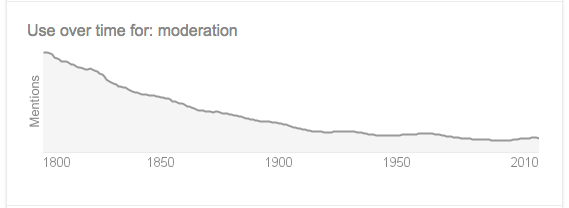
Lazy is not failure, it’s just lazy. Practice moderation, instead of binging on inspiration. Practice patience, instead of quick wins.  Start something, but then finish it.

Marc Andreessen, co-founder of the modern web browser, Netscape and leading venture capitalist, said pivots used to be called fuck-ups and begged for the startup community to put a little more stigma back into failure.

“We joke around the office that the worst is the fetish for failure,” Andreessen said. “You don’t want people to be intentionally encouraged to fail. Maybe it’s time to add a bit more stigma. The entrepreneurs I admire — I admire the ones who pivot but I really admire the ones who have persisted.”

Persist. It’s okay to succeed.

6 Strategies to Kick Imposter Syndrome to the Curb

Imposter syndrome happens when you don’t feel good enough. You’re afraid that at any moment you will be found out. You feel unsure of what you’re doing, that you don’t have any expertise, and that you’ve just been “faking it” all along. Over at US News and World Report today, I talk about the six ways to get over that fear and find confidence in yourself. Read it here.

5 Ways to Succeed as a Multi-Passionate Careerist

Discovering your career purpose is tough work, especially when you have multiple interests. Too many choices, the feeling of potentially missing out and the inability to decide can all act as roadblocks to finding that elusive dream job. Over at Brazen Careerist today, I talk about the five ways you can succeed, even as a multi-passionate careerist. Read it here.

How to Realistically Achieve Work-Life Balance

Balance is about choices, and it isn’t easy. Over at US News and World Report today, I talk how you can realistically achieve work-life balance. Read it here, and get honest. This is one of my favorite posts recently.

You Don’t Need To Settle

This is a guest post from my dear friend and change-maker Sam Davidson. Sam Davidson is a writer, entrepreneur, and dreamer who believes that the world needs more passionate people. To help people find and live their passion, he has written 50 Things Your Life Doesn’t Need. He is the co-founder of Cool People Care and Proof Branding, and lives in Nashville with his wife and daughter.

50 Things Your Life Doesn’t Need from Point House Films on Vimeo.

Finding and living your passion is a process. It’s not something you do once over the course of an afternoon at a coffee shop and are done with. It’s a journey you live deeply, repeating as necessary until you die. It’s a commitment, a lifelong pursuit, and a work of epic proportions. Once you decide that you must find your passion, you cannot settle until you do.

This is something I learned from Rebecca Thorman. She doesn’t settle. And neither can you when discovering what it is you love, who it is you’re becoming, and what it is you’re passionate about.

I’ve met Rebecca once. Nothing about her was second rate. The coffee shop where we met, the sushi place we grabbed dinner, the martini bar we went to after that – it was all top notch. Look at her blog design. Read about her boyfriend. Check out what she does for a living. Look at pictures of where she lives (or used to). What about this woman screams compromise?

Nothing.

Take heed: you can’t settle when you’re looking for your passion. You also can’t settle  – once you find it – as to where that passion takes you.

For some people, a passion becomes a profession. For others, it becomes a wonderful hobby to explore after work or on the weekends. Some become passionate about a cause and others about people. Be warned: when you decide that you can’t be anything but passionate, you are beginning the journey of a lifetime.

But, what a wonderful journey it is! I firmly believe that the world needs more passionate people. This is why I wrote 50 Things Your Life Doesn’t Need. Using the excuse to eliminate excess from our lives, I also detail how getting rid of what doesn’t matter can help you discover what does. The same is true in reverse: once we find what’s truly important, everything that isn’t can fade into the background.

Have you seen pictures of what Rebecca cooks? Doesn’t it want to make you do the same? Your passion will be similar. Once you find it, others will see the contagious fire within and want to find theirs. And when they do – when a friend or colleague tells you that they want to be as passionate about something as you are, make sure to warn them. Let them know that if they truly want to find that which makes them feel alive, they can’t compromise. They can’t settle. They’ve got to follow the journey until it’s logical and exciting conclusion. Your passion demands nothing less.

Serious applicants only.

Other things (actually in the book) that you don’t need:
#3: Untaken risks
#12: Pictures that don’t mean anything
#47: A job you hate

Contest:
Share your passionate story in the comments. What is it that you’re passionate about? How did you find it? How long did it take? Where has it taken you now? One lucky commenter will receive a signed copy of 50 Things Your Life Doesn’t Need.

Just One Word

You know how in Eat Pray Love, the sage memoirist Elizabeth Gilbert summarizes entire cities and personalities into one singular word? New York City is predictably assigned Achieve, Stockholm receives Conform, and the word Attraversiamo, which means “let’s cross over” in Italiano, is eventually assigned to Gilbert herself.

Now there is even a Facebook group to one-word devotees, where the city Provo, UT gets Marry, and Jacksonville, FL is stuck with Ridiculous. But there’s no need to stop at cities and people. Much can be acutely summarized in one word – your dinner meal, a presidency, a TV show – and now, as the year comes to a close, the last 365 days.

I’d like to tell you my word for 2010 was Sex! or Moola-oh-la-la, but alas, my every day isn’t filled with lingerie and shopping. We can save those words for the The Real Housewives or perhaps, Penelope Trunk (I only jest).

No, this year brought about a reverie from anxious comparisons and slowly, but surely I learned to lean less on my measuring stick for support. Perhaps most revealing is that my lungs experienced the luxuriate familiarity of full and deep breaths again and again, sometimes for entire days.

People will often ask me how I like DC or what my relationship with Ryan is like, and I will reply, “I feel like I can finally breathe.” Shorthand, which I hope people understand to mean that Ryan and the city allow me to sink into more of myself. They allow me to be more of me. People will often say Comfort to describe being able to be themselves. But I think it is more than that, as it is also Challenge.

The dichotomy between comfort and challenge is where I found my word for 2010 sitting in flashing lights above my head as I pondered (and is also my sorry attempt at describing Love which selfishly eludes description).

It is not really a word to describe the entirety of 2010, but rather the result of each day following the day before it. The word is – Confidence. That is, this is the year I got my mojo back.

Hello, Mojo.

Incidentally, when I did this exercise last year, I expected the year of 2010 to be all about Friends, Social/Culture. Yes, that is how I wrote it, forward slash and all. Which is exactly what DC has been the past two months, plus a healthy dose of Family. Funny how things work out in the end.

(The year of 2009 carried the theme Ryan/Alice, Love is All Around in case you were wondering).

My choice for a feeling to carry me into 2011 is Follow-Through. It’s a dull choice perhaps, but also full of intention, continuance, and completion. And it has so many great translations from its literal definitions like “movement after the release,” and “continue until all motion of body has ceased,” – all of which are so lovely when you apply them not just to baseball or golf, but to the excruciating discipline of self.

So, cheers to that. And cheers to you, dear reader, and whatever word you have in mind for 2011.

In participation with #reverb10.

Moving to a New City

Airports are particularly filthy places, no matter who you are. No matter what seat you’re in on the plane, everyone has to sit on the same toilet seats in the airport. Or hover, if you’re smart.

I’m not a germaphobe by any means, at least not yet, but airports get to me in a way that other public transportation doesn’t. I’m always looking to count on the goodness of my fellow travelers; but it’s usually about a fifty-fifty split as to who surprises me, for better or for worse.

One of the ideas that I put out there at the beginning of the year was that I wanted to travel more, and indeed, I have taken more trips in the last year than I probably have in my life. And each time, I feel all that is more around me, all that is bigger than myself, and it makes me want.

I get that you can make any city work for you. I’ve been making Madison work for me for almost ten years (oh my lord). And when others would complain about Madison (which they did a lot), I was the one to persuade its virtues (which I did a lot).

So no, this was not my first choice. Or second. Or even third, really.

Following my boyfriend for the good of his career is not my dream. Countless friends have been picked off the career ladder for just this reason and I have always held fast to my ambition during the barrage.

I’ve never had any intention of leaving my career – or my home. But as months, and then years started to separate me from my idealism, I saw in ways that I didn’t understand before how easily people can settle. How it wouldn’t matter much what the next job was because the trappings of work would still be the same, so you settle. Really great positions and ideas and causes can supersede the trappings, but still you come to rest.

So in less than two weeks, Ryan and I have settled everything, but in a different manner entirely.  In two weeks more, we will have moved and all the way to Washington, DC. I will work remotely – Alice.com is graciously letting me keep my position. I’ve rented out my condo. Ryan will open a new Brazen office. And we’ve found a great new place to call home. Ryan has lived in DC before, but it will all be new to me.

As I write this, I’m no longer in the airport, but on the plane. It is the time on the flight when everyone is curiously quiet – the babies are suckling, the old men are sleeping, and the young women are reading. Outside the window is a bit of how large the world is, and then, as the aerial views are covered with a blank slate of clouds, how large it could be.

We won’t be in DC long – I’m still holding out for my first choice, after all – but we will be there long enough. Long enough, I think, for an adventure.

Originality & Influence in Personal Branding, Architecture and Walmart

We are told to show streaks of our soul, to be original. To show irreverence. And especially, place your mark on the world. Eschew tradition.  And while you should be yourself, you should also, somewhere along the line – if you’re lucky, between high school and turning thirty – find that originality is only the beginning.

Renowned architect Frank  Lloyd Wright is known for pioneering one of the most important movements in architecture. His mastery of the compression and exaltation of space has little to do with inspiring awe (although that it does), and much more to do with a space that is living. That shows you how to act, impresses upon you what to feel and has a conversation with you. The building has a conversation with you, not Wright.

Which was probably a great mystery to those who knew Wright while he was living since he was quite the arrogant bastard. But his architecture lacks ego. Wright matched a structure to its environment. The infamous Guggenheim intentionally looks nothing like the home of Taliesin.

In contrast, Santiago Calatrava or Frank Gehry, two of the celebrity architects of present-day, are very recognizable. No matter where you are. No matter what city you’re in. A Calatrava or Gehry building has a distinct stamp, an identifiable arrangement with their hand apparent. An impression, of themselves.

And however distinct those buildings are from each other, they are also, ultimately, more of the same.   The type of sameness that dominates strip mall suburbia where big-box retailers have stamped their own identifiable arrangement with the ease of reflecting the last box onto the next, so it is the same from town to town to town.

It isn’t quite fair to compare a Walmart to a Calatrava, of course. A Calatrava is beautiful and a Walmart is most certainly not. But it is fair to compare this obsession we have to create and stamp our brand – in all of our novel and impertinent glory – across our careers, and projects and relationships.

Maybe if we all tried a little less to leave our imprint on the world, something might rise that’s a bit more meaningful than ourselves alone. We need to concentrate less on being special, and more on matching ourselves to our environment. Success isn’t about you.

Wright did this through architectural structures. You’ll do it through a lesson plan. Or diving. Or an iPhone app. Or parenthood. Whatever.

But if you say, “That’s not part of my brand,” you are missing the point. Match your skills and talents to the environment around you – those jobs, projects, affairs, and challenges that form our lives. That is change; listening to the milieu and giving it a voice.

Dilute your brand. It’s less than you think anyway. Pay attention to what’s bigger than you. Match your rhythm to what needs to be done. Respond.

The Miseducation of a Woman

Florida at Christmastime isn’t particularly warm, but it’s near tropical for Wisconsinites (of which I am finally one), so it is not the light breeze that causes my arms to hover close to my core while sitting at the pool. In fact, it is something that exists entirely in my head, and I have to consciously and decidedly lift my elbows and hands away from my hips and stomach towards the armrests so as to appear confident.

The right to be a woman, in the finest sense, relies on such confidence.

My two-piece bathing suit beguiles a certain flirtatious composure (it’s got polka dots), and at 5’8” (okay, 5’7” and a half) and 130 lbs, I wear it well. According to my original Illinois driver’s license, that identifying information hasn’t changed for ten years. I still weigh the same as I did in high school, but there isn’t a day that goes by that I don’t think I feel fat.

When I look at pictures of myself, I can see rationally that I am skinny, that I look skinny. That I am healthy, and I look healthy. That I am beautiful, and I look beautiful. Rationally, these are all facts that can be written and entered into evidence.

Quite irrationally, I can tell you that the daily struggle of being a woman is that my stomach expands when I eat, my thighs are big and my hips are large. I also worry about the backs of my arms, the portion of my leg directly underneath my butt, and the meeting place of my neck to the space underneath my chin.

Necessary qualifiers: I have an active lifestyle, I love to cook, I love to eat, I don’t read so-called women’s magazines and I usually love my biggest “flaws” – my thin lips, pale skin, imperfect nose and uneven eyebrows, thin fingernails, fine hair, big feet, small breasts, large rear. I’ve been known to run errands without make-up.

But I am looking in the mirror more often lately. Ryan says this to me, over Christmas vacation, while we sit in a high-rise condo that has a mirror on every wall and round every corner. There are a lot of mirrors here, I reply, but I know what he is talking about. He is worried about me, he says.

I don’t wonder at air-brushed models but the pre-teen girl walking down the street in West Palm Beach, dressed with too many inches exposed on her sapling thighs. Or the girls at the Philly wedding whose legs are the size of my arms and whose arms are the size of my wrists. Is this sickness? Disease? Good genes?

A couple mornings later, I spend too much time getting dressed considering I work for a start-up with a casual dress code. I dress up because I like to. I try not to stand out too much from my colleagues who wear jeans and sweatshirts by wearing a cotton t-shirt fabric scarf, or nice boots over leggings. I wear a lot of casual dresses with tights. I try to match the VPs (all men), but since there are no women executives, it’s difficult to know if I’ve got it right.

I could go on.

And then, on any given day, I read about why there are fewer women CEOs, that women are better CEOs, that women are less promising as candidates for promotion, that surgeons can now relocate fat from your thigh to your chest, that kids see housework as a women’s domain, just 4% of venture capital goes to women, wives earn more than their husbands, and just being a woman is a pre-existing condition in healthcare.

I find the truth somewhere, not in the piling up of research, like clothes discarded on my floor, but in accounts from real-life women, between the lines in their interviews, bluntly stated in their ethos, and shared and protected among friends.

“The truth is,” Joanne Lipman says, a former deputy managing editor at The Wall Street Journal and founding editor in chief of Condé Nast Portfolio magazine, “women haven’t come nearly as far as we would have predicted 25 years ago. Somewhere along the line, especially in recent years, progress for women has stalled. And attitudes have taken a giant leap backward.”

Understanding the Anxious Mind

For the past eight or nine months, I’ve created a bubble around me of people I trust, making sweeping efforts to withdraw from drama. Through this process, I learned; the bubble always pops.

Here’s what that’s like for me: Imagine, you’re a crumb and you fall onto the sidewalk and an ant discovers you. His tiny ant friends are soon alerted and before you know it, you’re swarmed! A disgusting black blanket moves furtively and anxiously to completely and methodically chew through your every last morsel. The very thought makes me sick.

And more than anything, this is what it’s like when things are outside my locus of control. And I love control, especially in all of its anxiety-ridden devastation.

“Anxiety is not fear, exactly, because fear is focused on something right in front of you, a real and objective danger,” reports the New York Times. “It is instead a kind of fear gone wild, a generalized sense of dread about something out there that seems menacing — but that in truth is not menacing, and may not even be out there. If you’re anxious, you find it difficult to talk yourself out of this foreboding; you become trapped in an endless loop of what-ifs.”

For me, the what-ifs appear with even the simplest of situations. Ryan will inquire, for instance, if I would like to attend a concert last-minute, and my chest will immediately be gripped with all of the possible unknowns, and how all of these unknowns make it impossible for me to go.

Where is it? What time does it start? Are we going to get there late? Do we have to pay a cover? Will I have to walk in heels? I don’t have a cute outfit without heels. It’s going to be cold outside. Will I have to stand at the concert and carry my coat? Will it be hot? Will there be a lot of people? Are the people going be younger than me? Will they be boring? Will the band be good? Who’s going with? Are we going to get drinks after? Will the restrooms be clean? I can’t stand public restrooms.

No, I don’t want to go. I can’t go. Rationality urges me to do my make-up and try on clothes while anxiety grips my heart so tightly that I’m dripping with angst. By the time Ryan arrives, I’m paralyzed into doing everything I can not to burst into tears.

I distinctly remember my first such outburst in a sixth-grade hallway. After an elementary school of calm, I peeled back the doors on middle school to discover inequalities, insecurities and the bulging wart of worry – a reoccurring blemish in my otherwise untarnished path towards happiness.

Taken together, panic, social anxiety, phobia, obsessive-compulsive, post-traumatic stress and generalized anxiety disorder, make anxiety the most common mental illness in America, affecting an estimated 40 million adults, reports the Times. That’s not even counting the garden-variety worriers like mothers who fret when their daughter doesn’t call, or husbands that believe a phone call in the middle of the night signals a terrible occurrence.

My coping mechanism is to nest as methodically as anxiety chews. Withdrawing further perpetuates the vicious cycle of shrinking into comfort, into habits, into a place that is safe and away from criticism or mistakes or hurt or anger. I crave the days that are built around everything going according to plan.

Research shows that I’m good for the human race. Without those who are hyperviligant, we wouldn’t be able to leap into action so quickly. High-reactive kids are “less likely to experiment with drugs, to get pregnant or to drive recklessly.”

The Times also reports we’re “generally conscientious and almost obsessively well-prepared. Worriers are likely to be the most thorough workers and the most attentive friends. Someone who worries about being late will plan to get to places early. Someone anxious about giving a public lecture will work harder to prepare for it. Test-taking anxiety can lead to better studying; fear of traveling can lead to careful mapping of transit routes.”

But for me, the mental anguish of wearing myself ragged “with a brain that’s always on high alert” is suffocating. I long to be laidback. To be the kind of person who doesn’t wring their hands under the table. The kind of person who “gives up any notion of being guarded or protected” in order to be intimately known. A person that can arrive effortlessly to a concert.

Gratitude is hard for me sometimes

Note: This was originally a guest post for Sam’s Appreciation Revolution. You should check it out.

I’m an extremely lucky person. Really. Sometimes I can’t even believe how lucky I am. I have the best mother, best job, best boyfriend, best condo, best everything.

And yet still, I want. I still have that hunger for more. Selfishly, I am often found in dark corners brooding over the infallibility of life, the unfairness, the annoyances, and over that stupid guy who cut me off this morning in the white Dodge Ram with a ladder strapped to the top and a license plate forever seared in my memory. I did not feel lucky that I didn’t skid off the road to my untimely death. I just wanted to hurt him.

In retrospect, I do feel grateful, immensely grateful, that when I sped up, tailed, and yelled obscenities at the man in the Dodge Ram, that we were going sixty-five miles per hour and there’s no way he could have heard me. I’m grateful that at the last moment I decided not to show him the slender nature of my middle finger. I’m grateful that my exit to work arrived before I really gave him a piece of my mind. I imagine – as he well should be – he was grateful as well.

This is the ugly side of appreciation, the not so fluffy and pillowy kind. There are chapters of my life when I am overcome with the sweet and sugary kind, when I am surrounded by rainbows and treats and sparkly revelations. But mostly, I have little patience for swaths of gratitude to envelop me.

Gratitude is hard for me sometimes.

I imagine it’s hard for most people, even the big teddy bears of appreciation. It means accepting a whole litany of injustices and bending your eyesight towards what is beating both in and outside of you simultaneously to which, I’m sure, only the heartfelt natures of Gandhi or Mother Theresa have fully mastered. It means not being afraid of the past, the future and the ever-so vast present, because really, gratitude is about living in the now.

So, you could write about the things you are happy for daily – which I do. Or, you could take a moment every Monday morning to reflect upon the previous week, which I do. Or, you could look up at the ceiling occasionally, through the drywall, up through the six floors above you and up to the roof, all the way through the clouds and at the sky and say, “thank you.” I do that too.

Or you could just drive to work like you do every day, embracing the good, the bad, and the dick in the Dodge Ram. Sometimes, that’s gratitude too.