Working from home seems like a dream—until you try it. Before you try convincing your boss you can work remotely, head on over to US News & World Report, where I talk about the pros and cons of working from home. Read it here.
Category Archives: Self-management
It’s (Not) Okay to Fail
Generation Y does not need permission to fail. We got medals and ribbons for that very reason as kids. Gen Y normalized failure. Failure is not scary. It means you get to stay in the status quo, which most of us are very comfortable in. You get to keep being who you are, and that isn’t all bad.
It’s success – that’s scary. Indeed, we’re not changing stuff up because we’re afraid to fail, but afraid to succeed. We need to let people know, “It’s okay to succeed.”
Part of the reason we are so obsessed with normalizing failure is that we want to feel good about ourselves. And that’s hard right now, no doubt. It’s hard to find a job, to get out of debt, to pursue meaningful work. It’s hard to make time for family, get away from our computers, and engage face-to-face. It’s hard not to compare our bottoms to everyone’s top on Facebook.
So, we embrace failure. In its call for speakers, the Dare Conference says, “If you’re willing to be vulnerable, admit your failures, and share what you learned from them, we want to hear from you.” Apparently people aren’t doing that enough on the Internet?
So, we court failure. This guy goes around trying to get rejected on a daily basis. He intentionally tries to fail as if that’s an accomplishment.
So, we sleep with failure. We dream of failure. We live with failure — as a point of pride.
I don’t want to fail. Failure is boring. Failure usually means you didn’t try something; you didn’t follow through; you didn’t finish. Most people don’t really fail. They succeed at being lazy, and call it failure. But at least they tried. Er, right?
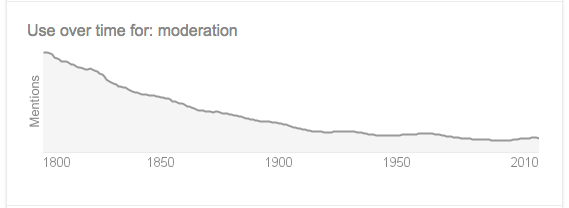
Lazy is not failure, it’s just lazy. Practice moderation, instead of binging on inspiration. Practice patience, instead of quick wins. Start something, but then finish it.
Marc Andreessen, co-founder of the modern web browser, Netscape and leading venture capitalist, said pivots used to be called fuck-ups and begged for the startup community to put a little more stigma back into failure.
“We joke around the office that the worst is the fetish for failure,” Andreessen said. “You don’t want people to be intentionally encouraged to fail. Maybe it’s time to add a bit more stigma. The entrepreneurs I admire — I admire the ones who pivot but I really admire the ones who have persisted.”
Persist. It’s okay to succeed.
6 Strategies to Kick Imposter Syndrome to the Curb
Imposter syndrome happens when you don’t feel good enough. You’re afraid that at any moment you will be found out. You feel unsure of what you’re doing, that you don’t have any expertise, and that you’ve just been “faking it” all along. Over at US News and World Report today, I talk about the six ways to get over that fear and find confidence in yourself. Read it here.
5 Ways to Succeed as a Multi-Passionate Careerist
Discovering your career purpose is tough work, especially when you have multiple interests. Too many choices, the feeling of potentially missing out and the inability to decide can all act as roadblocks to finding that elusive dream job. Over at Brazen Careerist today, I talk about the five ways you can succeed, even as a multi-passionate careerist. Read it here.
How to Handle Difficult Career Transitions
You have the option to listen to this post:
Audio clip: Adobe Flash Player (version 9 or above) is required to play this audio clip. Download the latest version here. You also need to have JavaScript enabled in your browser.
Ever since we moved, I have been doing projects. A lot of them. Whereas other people will spend money on clothes and beer, I will spend money on molding, paint, and shelving. Part of my obsession is that I have a design background, but most of it is that I am an extreme nester. God help me when we decide to get pregnant.
Needless to say, it’s a problem.
Especially since I work from home. I can’t concentrate until everything is done and put in it’s place. Or mostly done. And then, without fail, with every project, there is a moment. A sense of dread. Total exasperation. Exhaustion.
This time around it was the paint. Well, it is always the paint. We didn’t paint our last place, thank God. It was already white. I like white walls. A lot. But we painted two places ago. Or rather I painted everything and twice. And we painted the place before that, and we painted this place.
Every time, it is a nuisance. You always forget how hard painting really is. How long it takes to put up the stupid blue tape, how annoying it is to do two coats, because you really thought it would take just one. Humans have evolved to intentionally forget such things.
I always look forward to painting, until I want to stab Ryan in the head with a brush and the color is completely off despite trying seven, eight, nine samples. I hate painting. Let this post allow me to never forget.
Ryan claims he never forgot, but he helps me anyway. And while I am freaking out that the white may be too white, Ryan is saying phrases like “Let’s let it dry,” and “We need to do a second coat,” and “Oh, I’m really starting to like it,” as fast as he can manage.
Then finally, we are done.
I don’t hate it, but I don’t love it. The next morning, it’s liveable. The next day, it’s growing on me. And in a few days, I’ve decided it’s the perfect color. How could I have ever thought otherwise? My heart swells I love it so much. (“Let’s paint the bedroom now,” I exclaim. Ryan hopes that I am kidding.)
Transition times are tough. When paint dries, you can literally see the color changing, your paint strokes disappearing, and your walls going from one state to another. In life, it’s not as cut and dry. Like when you get a promotion, and suddenly your slammed with more work than you can seemingly handle. Or when you start a side job, and you’re juggling multiple missions at once. Or when you get to know your boyfriend’s family and they drive you up the wall.
There will be that moment. The one where you have no idea what you were thinking. But give it time. Transitions need time. You have to settle in, find your new habits, define a different self. Your mental and physical memories, ingrained in your everyday, will push back. You’ll want things to stay the same. You’ll want to be the same person, do the same things. You’ll try to retreat. Change will seem much more of a nuisance than it’s worth.
But then the paint will dry. (I promise.) You’ll wake up the next day and life will be a little easier. And things will be a little easier the day after that. Until you couldn’t imagine anything different. And you’ll forget all the bad stuff until next time, thank God.
So if you’re in a transition, know that it will be difficult. Even when it’s not supposed to be. Even when it’s something good and exciting and amazing. It’s still going to be tough.
Just give it time. And maybe a second coat.
How to Do Work You Normally Procrastinate
When I procrastinate a lot, it’s usually a sure-fire sign that my priorities have shifted, and my to-do list hasn’t caught up yet. Alas, the task still needs to get done! Over at US News and World Report recently, I shared my ten fail-safe strategies to avoid procrastination. Read it here, then share what works for you to stop procrastination in the comments.
3 Unconventional Ways to Love Your Job
It’s hard out there for a career. If only you had more challenge, more money, more responsibility. While you can and should ask for all of these things (going direct seldom fails), it’s not always that easy.
Here are three ways to build your self-confidence on the road to being one of those annoyingly awesome people who light up when they talk about what they do.
1. Get a side job. If you’re not ready to quit your job that sucks, get a side job consulting or freelancing. More cash means you’re able to create financial padding if and when you do decide to leave. But more importantly, getting distance between you and your current job is essential for creativity. When you stretch your muscles, your new job will stimulate ideas for your old job, and vice versa. Everybody wins.
(Sidebar: Should you tell your boss? Yes. No need to get fired over something silly. And no need to make it a big deal either. Just say you’re doing work for a company/friend/non-profit on the side, and of course, you will put your current position first. If there are any concerns whatsoever, you’re happy to address them. Easy peasy. And if it freaks you out to even think about another job, try blogging, volunteering, or taking a class. Don’t cop-out.)
2. Try being nice. If you’re not too happy, chances are it shows at your desk. When we start to feel like we’re “owed” a better position, resentment builds. Let it go. Be extra nice to your co-workers and boss. Get an attitude adjustment and move on. Being the bigger person isn’t easy, but no one is noticing you huff and puff anyway (and if they are, they don’t enjoy it), but they will notice a bit of extra sunshine.
Making other people’s jobs easier will not only make you feel good, but it is also the quickest way to advance your career. Being likeable is relationships is everything.
3. Reject another job offer. There’s nothing more powerful than rejecting a job offer. This works because it reminds you that you have a choice. Especially in today’s economy, we’re being conditioned to believe you should be grateful for whatever job you have. But who wants to be unhappy? Rejecting an offer lets your brain and heart know that you still have a choice. Your skills are in demand. If something were to happen at your current position, you’d be okay.
Of course, you may discover you’re stoked about a new opportunity and move on. That’s okay too. The point is to get some grease under your behind and start moving. It’s easier to show potential employers you’re amazing when you don’t need a job tomorrow.
Each of these ideas are designed to help you realize, how you choose to spend your time, how you make your money, how you give value to the world – those are all up to you. It’s up to you to love what you do.
Do you love your job? Tell me in the comments whether or not you enjoy your current position, and why.
The Grief of Growth
Liam (name changed) runs an online business where he sells digital goods on a subscription basis. After approaching nearly $1 million in revenue, he experienced a mindshift. The shift was subtle and unconscious; he didn’t realize the harm he caused until later.
On the side, I consult for Liam’s company. For weeks, I tried to convince Liam to test changes on the site that could potentially increase sales to no avail. I couldn’t understand, why didn’t he want to make more money? Or at least try? Wasn’t that why he was paying me?
Exasperated, I exclaimed, “You’re essentially telling customers to cancel during every step of the process! And then they do. How can we ever expect to grow revenue?”
Liam paused. “You know what, Rebecca,” he said. “When we came close to $1 million in revenue, I thought, is this bad? Are subscriptions evil? Am I taking advantage? Is my business model inherently wrong?” His answer was to place detailed instructions on how-to cancel everywhere on his site.
More than 150,000 people have downloaded Liam’s products. He’s a smart guy. He’s also part of the Google generation where “Do No Evil” is the motto for life and business. Increasingly, that means making stuff, but not making money.
Freelancer Amber Adrian (disclosure: she works for me through Alice) recently launched a series of essays on perfectionism. Her pricing strategy was “pay-what-you-can,” with a suggested price of $5.
“I wanted to get this into as many people’s hands as possible,” she said, “to pave the way for a bigger package that will be a set price. I’m hoping that people find it super valuable and share it around and that brings in more people.”
She told me readers paid more than what she would have charged, but I still cringed. I had heard about the amount of work she put into those essays. Not to mention, she already wrote (for free) about these topics on her blog. If she believed the essays to be super valuable, why not come out swinging with a price that indicated that value?
The truth is, unless you have an extremely wide reach, discount or zero pricing does not work. And hardly anyone has that kind of reach. The majority of us (start-ups, freelancers, small business-makers, entrepreneurs) are in markets with smaller audiences and niche targets. And that means premium pricing.
Charging for your work or products, however, just doesn’t seem to jive with the so-called basic rules of the Internet. Somewhere along the line, Free! became an acceptable business model, and revenue and sales became a sign that you didn’t get how the new economy worked. Suddenly, we’re afraid to make money.
“It feels weird to be selling to my blog readers,” Amber says. “The lines are a little blurred and I’m working to draw them more firmly. I’m very emotionally attached to my blog and it feels weird to try to turn it into a business space.”
But the lines don’t get less personal when you aren’t marketing to friends. Liam spoke to me about how his customers are from modest means, and he is often more concerned that his customers save money, rather than he make it himself. Even with a healthy level of success most would be envious of – and a growth rate a fully-backed and funded start-up would salivate over – Liam is often worried. And he seems to feel bad and apologetic at his success.
A good many of us want to start and grow businesses (or nonprofits or blogs or something). But the majority of us cannot. Our minds won’t let us. We put up all sorts of barriers and paradigms that tell us no, this isn’t right. Even if you manage to get an idea off the ground, your negative nellies will tell you that the product isn’t great/has bugs/isn’t ready/is stupid and the big one: you’re not good enough.
We all tell ourselves these invisible scripts every day, and they go into overdrive when we try anything new. We literally have a physical and biological reaction that tells us to stop, back away and let it go. Financial expert Ramit Sethi has an exercise in one of his courses where he asks people to identify these scripts. Here is a sampling of what people say:
What will I do if I succeed? Do I deserve to succeed?
Not good enough – Just writing those words makes me irritated as hell. But that’s what I battle with.
What skills, expertise do I have that someone will be willing to pay top dollar for? I’m afraid I’m just not good enough, special enough, have great enough ideas to warrant the financial life I so desire.
And the fear of not being good enough, or un-deserving, does all sorts of weird things to us when we try to implement our ideas. We decide it’s more important to be right, than effective (we don’t want to fall flat on our faces, after all), and we move forward with assumptions that are clearly incorrect.
Despite the current obsession with tracking, testing, metrics and analytics in the start-up world, we still primarily make business decisions based on emotions, not data. Business risk doesn’t depend on your conversion rate, but what you say to yourself in your head.
“It did feel more comfortable for me to do pay-what-you-can,” Amber said, “because I’m still a little uncomfortable with this whole Pricing My Work thing. There’s definitely some fear involved.”
For Amber, having people pay-what-they-could helped her plow through that fear. “Most people ended up paying the suggested $5, but a large number paid in the $10 range,” she reports. “One person even paid $50. Only one person paid less than $5, at 99 cents.” Amber plans to charge upwards of $50 for her next product.
As for Liam, I asked him to reframe his worldview. Instead of worrying if he was ripping people off, he should focus on providing as much value as possible to his users. If you are providing value, there is no reason not to charge, no reason to feel bad. We don’t need to be so wrapped up into “do no evil” that we talk ourselves right out of profit.
Instead of our emotions plowing us into despair over success – or potential success – we should focus on the fact that growth, even and especially financial growth, is healthy. Of course it will take work. Things will change, and with it will come more responsibility and expectations, but only if we can accept that we’re worthy and good enough to provide mad value and make mad money in the first place.
A New Residence for Home
Ryan is so very tall and my condo is so very small. So it was not without reservation that we recently moved in together. We talked about it a lot – the important things, the mundane, the humdrum. In talking about moving in together, we broke our record in effective communication. And then we talked some more. “If we could communicate like this for the rest of our lives,” Ryan said, “we’d be the best couple ever.” And so it went… until.
You know, moving is very stressful, and moving in with someone you intend to spend your life with is this gigantic life decision, and somehow all of the pressure and insanity of it all got put into one question – did we need to buy another dresser?
Perhaps the most romantic notion I had of combining our belongings and everyday lives was that we would be able to use my library card file (currently in use as my sock drawers) as our dresser. But, no. No, no, no. Ryan needed a place to store his t-shirts. All forty-six of them. And he didn’t find it at all romantic, never mind practical, to store a lone t-shirt per tiny drawer.
I won’t take this moment to comment on the romanticism or practicality of forty-six t-shirts, but I do recommend that you, my dear reader, come to your own conclusion on that point.
Besides his t-shirts, Ryan also likes to hang his towel on the closet door instead of the towel hook we bought specifically for the purpose. He takes out the trash and cleans if I cook. I don’t know when, but he watches ESPN because that’s the channel that appears when I turn on the TV. I am always on the computer and he is always on the phone. He leaves his eye glasses on the bathroom counter, but little else. His shoes are lined up across the top and bottom shelves of our closet, and underneath the bed. Waiting for Cribs, I guess.
He overtakes our small white couch like a dog. If Ryan could be animal, he has said that he would want to be a big, slow dog, so please don’t think I am insulting my incredibly sexy boyfriend publicly. Well, a dog or a lion, he said. There are a lot of similarities.
He has a repertoire of several particularly esteemed dishes that he can cook: pork chops, meat spaghetti – in which the spaghetti is actually egg noodles – and chicken and broccoli “stir-fry.”
He locks the door when he leaves in the morning and says to me when he’s home: “You know you don’t have to lock the door when I’m here, right? I will protect you.”
“It’s a habit,” I reply.
He opens the shower curtain from the wrong side, and never closes the blinds. If you touch him when he’s not expecting it, he will unreasonably flinch and exclaim “ow!” like he means it.
When we watch a movie, he will lie down and I will lie down, and we will spoon and watch the screen and out the sixth-story window. When I get too tired, I will turn around and settle into his chest, and he will kiss my forehead and I will go to sleep.
Ryan moved in on the anniversary of our first kiss.
This weekend, I think we’ll buy a dresser.
Good Hearts.
How to Deal With Big Jerks
In accordance with the laws of motion, anger and vengeance, I have desired for suitcases to fly satisfyingly through windows, for nasty notes to appear in an inbox or two, or three, and for glasses to break into a great many sharp pieces in response to those big mean jerks who insist on climbing up my backside and making a home.
In some cases, I have succeeded. In many more, I have deftly restrained myself.
It’s an extraordinary kind of derangement to rip into another, and to do so continually and rancorously. The derisive nature of such a person and their seeming hero quests for revenge are certainly not encouraged, although I admit to feeling such pangs myself.
To get that son-of-a-jerk who was not-so-politely requesting the appearance of my middle finger that one time. For instance.
The motivation of a big mean jerk is jealousy gone for the jugular. A normal reaction amplified in an abnormal way. Successful people get the brunt of it of course. Nobody kicks when you’re down, so you don’t see much of that. More, you see unhappy people just trying to be happy, and not having a good run at it.
I’ve been there – short glimpses of what it would be like to be a total creep – so I reply with deference to big mean jerks if at all possible.
Mostly though, I let it go.
A big mean jerk, their demons and their decisions should not be of great concern to you, and are better left to psychology. You can’t possibly know what they’ve been through. Maybe they’re just having a bad day. Or maybe, a bad life.
As such, not engaging a big mean jerk is quite a suitable course of action, one that those individuals will be grateful for at a later date. Because who wants to be like that? No one does.
If a big mean jerk continues to bully, insult or assassinate your person, or if you believe a preemptive attack is necessary, then you can utilize two powerful phrases for such endeavors: “I’m sorry,” and “I understand.” Possibly both, if it’s particularly cankerous.
We need a place to debate ideas, to say no, to be ourselves, to live, to judge a little less along the way. A simple, “I understand where you’re coming from and respect your viewpoint,” goes a long way.
Then, keep going. Keep going on. You can only dwell so long.
One Guy, One Girl, Two Start-Ups and a Relationship
Quick, which is more difficult – work or life?
Up until a year ago, both competed for my attention, each piling weight onto the seesaw to rise towards the favored position. A year ago, however, I started working at Alice and Ryan and I started hitting our stride (both of which were not without challenges, however… many, many challenges).
While working for a start-up demands hours, it demands more in mental energy, in spikes of time about as predictable as a bingo game, where the only invariable is that you know work will be stop and go. This means it’s often difficult to separate work and life, especially in the statuesque pursuit of balance, but while I used to recognize and promote blur, I’m now mindful of the distinct delineation between the two.
Smart people don’t balance two sides of the same coin – your work and life are, after all, inseparable from the backbone of your binding. You can’t push one to one side and one to the other and hope equilibrium presents itself because the entities are glued to each other and to you.
What I mean, for example, is that I cannot see Ryan and refrain from discussing at length our work. I have long agreed that behind every good man is a good woman, and likewise, the same holds true for Ryan and I on both sides. While he is the one that shows up to Brazen headquarters each day, my ideas fill his head. While I’m the one who walks into Alice each morning, Ryan’s sense and advice follows me.
More to the point, I guess, is that there is a mutual respect for what we choose to do with the majority of our day and into the night, and sometimes into our sleep and into dreams. Although when we do relate to each other our dreams from the night before, it’s not very likely to include the mention of a spreadsheet.
Right now, Ryan is across the street from me working. His offices are located diagonal from my condo, but I have yet to see him this week except for when he dropped me off from our weekend in Philly together on Sunday. I was working on a Wall Street Journal exclusive early this week, and he’s working on big plans for Brazen later this week. We also have friends, family, a basketball league, dance classes, books, blogs, grocery shopping, the gym, bill-paying and other magnitudes and minutiae of daily life competing for our attention.
Oh, and the new season of Chuck just started.
When I walk into work, much of that has to go away. I imagine this is natural for most people who enjoy their jobs, but particularly at start-ups you have to be ready to do whatever is put in front of you that day. Everything planned for the day will get eaten up by new priorities, larger plans and whether or not the toucan (our CEO) monopolizes all the time with the dolphin (our President and my direct boss). This can be best described as acting as a pivot, keeping your center, but spinning to each new person and project that appears.
One of the best parts of working at a start-up is that an idea spun in the morning has the potential to be fully realized by the afternoon. It can be that quick and magical and exhilarating. Also, the customers. When I worked for a non-profit in a trailer across from the food pantry that I was raising money for, I thought I wouldn’t again experience the rewards of being in such direct contact with the people I helped. But Alice has that.
One of the more challenging things is that blurring my work and my blog and my life to such an extent can make me very unhappy. Sometimes I feel like I’m always working which is frustrating, so I’ve tried to have clearer boundaries. I don’t really believe in work/life balance as an ideal, but no longer do I trust in work/life blur so much either.
As a generation, we’re always on. Is it okay to tweet during your workday? How often? What about talk to your significant other? Send personal emails? Do you work with your partner at night? Accept calls from the boss? Check your iPhone during a movie? Where is the line drawn and what is acceptable?
For Ryan and I, we have chosen to spend the majority of our day, not with each other, but with two different start-up companies. Our lives and relationship are more difficult and more enriched because of it. What about you? Work/life balance: truth or myth? Does it stand a chance?
The Corruption of Authenticity
The derision and drama on blogs, news and broadcast nowadays is entertaining, like a domino of tabloids back-to-back. And while we instinctively know that insistent self-actualization is an incredibly banal form of entertainment, it remains so vast in its infectiousness, and so strong in its self-referential feeding, that navel-gazing is now suffocating in its empire.
Let’s poke some holes for air.
You are not genuine because you told me of your heartbreak, or your success or your disease or your strengths or your weaknesses or miscarriage or move or relationship or promotion or demotion or disability or conflict or how your cat peed outside of its litter box.
Gross over-sharing is not encouraging or revolutionary or innovative. You are not absolved because you made what was once private now public.
Enough of the cultish drippy-rainbowed sentences: “What’s holding you back? Yourself;” “Motivation is first about taking that first step;” “Do whatever you want, your intuition will guide you;” “Force yourself to look inward;” “Start telling yourself positive things instead of negative things.”
Enough crowdsourcing your life’s misdeeds, your life’s lessons, your life’s minutiae. Enough with bogus empowerment, dramatics, and inflated realities in the name of support, transparency, attention, acceptance. That is not authenticity. That is allegiance to a culture of nineties motivational speeches.
“For me, the demand that everything be paraded in the public space and that there be no internal forum is a glaring sign of the totalitarianization of democracy,” philosopher Jacques Derrida maintains. “If a right to a secret is not maintained then we are in a totalitarian space.”
“Which is to say,” author Zadie Smith argues in Changing My Mind, “enough of human dissection, of entering the brains of characters, cracking them open, rooting every secret out!”
Authenticity is not about revealing it all, nor complete transparency, nor opening the door and shining a very bright light on every raised goosebump. Authenticity is not about blurring public with private. Authenticity is not about the flailing and flapping of our entire hearts and minds to an audience of mirrored hosts.
We have a right to our private lives. Dear God, we have a right to keep the corners of our lives to ourselves. And it is delicious to do so.